
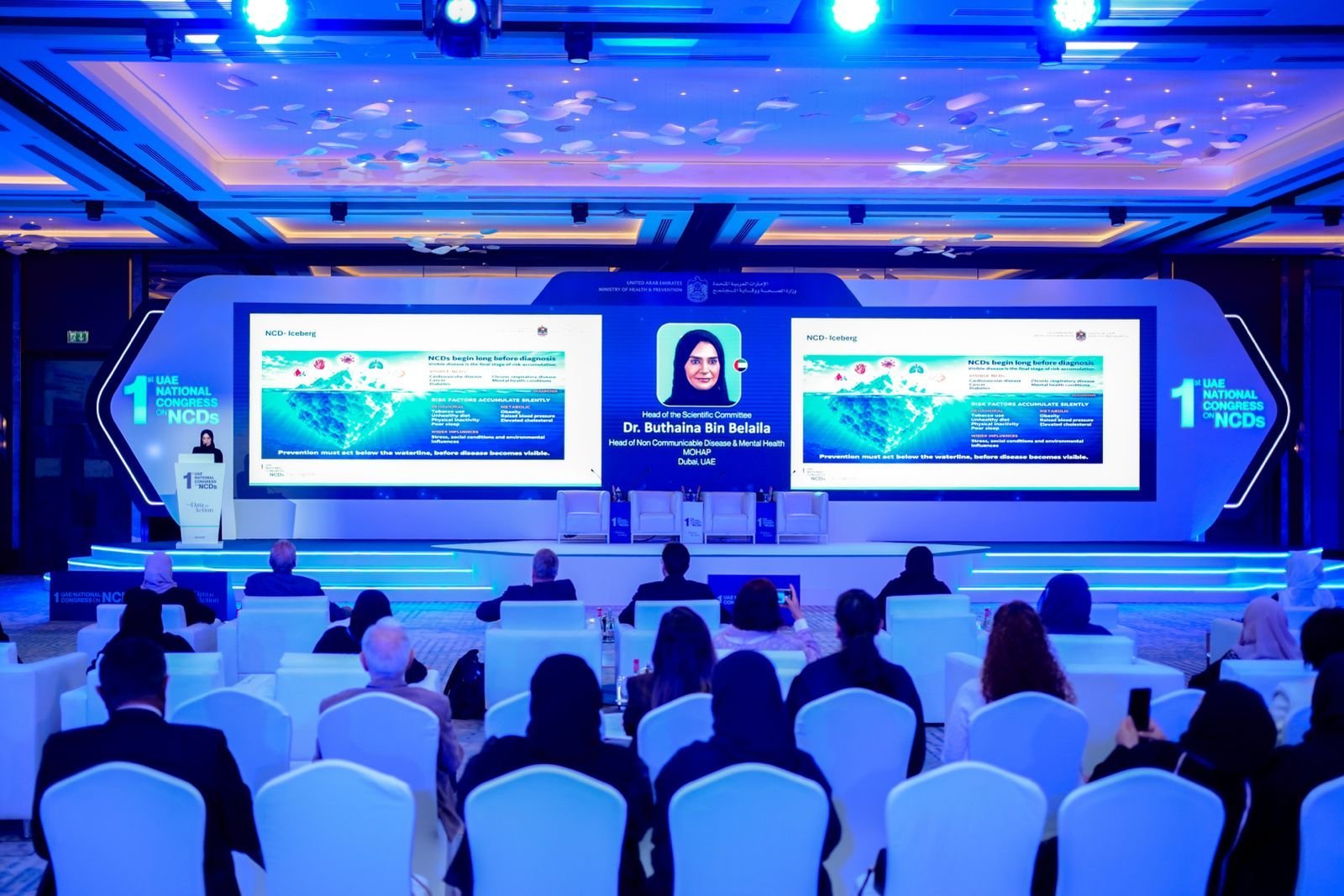
The first conference on Non-Communicable Diseases (NCDs) concluded in Dubai following three days of scientific sessions and specialised discussions exploring ways to strengthen prevention and early detection, develop integrated healthcare models, and harness data and modern technologies to improve health outcomes.
Held under the patronage of the Ministry of Health and Prevention (MoHAP), the three-day conference brought together more than 600 delegates, including senior government healthcare officials, public health specialists, researchers and academics, to discuss national priorities and explore strategies for the prevention and management of non-communicable diseases (NCDs).
These included cardiovascular diseases, diabetes and obesity, cancer, kidney and respiratory diseases, as well as mental health, prevention, integrated care models, health economics, digital transformation and applications of artificial intelligence in the healthcare sector.
The conference brought together healthcare leaders and experts from across the sector, including Dr. Nada Al Marzouqi, Director of the Public Health and Prevention Department at the Ministry of Health and Prevention, and Dr. Buthaina Bin Belaila, Head of the Non-Communicable Diseases and Mental Health Department at MoHAP and Chair of the Conference Scientific Committee, alongside a number of officials and specialists in public health, prevention and chronic diseases.
Specialists from a number of government health entities and institutions across the UAE also participated in the conference, including representatives from Dubai Health (DH), Emirates Health Services (EHS), Abu Dhabi Health Services Company “SEHA”, and Abu Dhabi Public Health Centre (ADPHC), alongside academics, researchers and specialists from healthcare and academic institutions in the UAE and abroad.
In remarks on the occasion of the conference, H.E. Dr. Hussain Abdul Rahman Al Rand, Assistant Undersecretary for the Public Health Sector at the Ministry and President of the Conference, said: “The conference highlighted the importance of unifying national efforts to address non-communicable diseases and strengthening the role of the Ministry of Health and Prevention in developing frameworks and policies that support prevention and early detection.
He also stressed the importance of coordinating efforts among different healthcare entities to ensure integrated action and translate health data and evidence into practical and measurable programmes.
He added that the Ministry continues to strengthen the role of public health and primary healthcare in reducing risk factors and managing chronic diseases, while supporting scientific research and leveraging modern health technologies to help develop health policies and improve the quality of healthcare services and health outcomes across the UAE.”
For her part, Dr. Buthaina Bin Belaila, Head of the Non-Communicable Diseases and Mental Health Department at the Ministry and Chair of the Conference Scientific Committee , said: “The scientific value of the conference lies in moving from presenting knowledge to applying it in prevention.
She explained that data derive their value not from availability alone, but from their ability to help understand patterns, detect risks, identify gaps and guide interventions.
She added that the scientific programme addressed key issues shaping the future of NCD prevention, from early detection and risk assessment to innovation and digital health.
The programme also approached human health as a continuum across the life course, so that prevention becomes part of care before disease develops.”
Recommendations to strengthen prevention
The conference concluded with a set of recommendations focused on five key areas: prevention and early detection, integrated care, health data and technologies, health economics, and scientific research and outcome measurement.
The recommendations called for expanding prevention and early detection programmes for risk factors and chronic diseases and further integrating them into primary healthcare pathways to support earlier identification of conditions and reduce complications.
The conference also recommended developing integrated care models and strengthening connections between primary and specialised healthcare services, while integrating risk-factor management, mental health and long-term follow-up into care pathways for patients with chronic diseases.
In the area of digital transformation, the recommendations emphasised greater use of health data and real-world data to identify risks, guide interventions and measure their outcomes.
They also called for advancing the responsible use of artificial intelligence in early detection and clinical decision support, under clear governance and data-protection frameworks.
The conference also called for greater use of health economics tools to assess the impact of prevention and early detection programmes and guide resources towards measurable interventions, supporting the sustainability of healthcare services and reducing the health and economic burden of NCDs.
The recommendations also called for strengthening scientific research and outcome measurement by supporting local research, linking its findings to health policies and practices, developing clear indicators to monitor the impact of prevention and treatment programmes, and translating scientific evidence into practical action.
A life-course approach to health
The discussions emphasised the importance of adopting a life-course approach to health, beginning in childhood and adolescence and extending through healthy ageing.
The approach places greater emphasis on prevention-related factors, particularly nutrition, physical activity, mental health, and behavioural and environmental factors.
The conference also stressed the importance of continued coordination between the Ministry of Health and Prevention, government health authorities, the healthcare sector, and academic and research institutions.
Such coordination strengthens integrated national efforts to prevent non-communicable diseases, develop care models and support decision-making based on data and scientific evidence.
The conference was held as part of the UAE’s broader efforts to strengthen public health and prevent chronic diseases, while developing a healthcare system focused on prevention, early detection and integrated care, supporting community health and quality of life
