




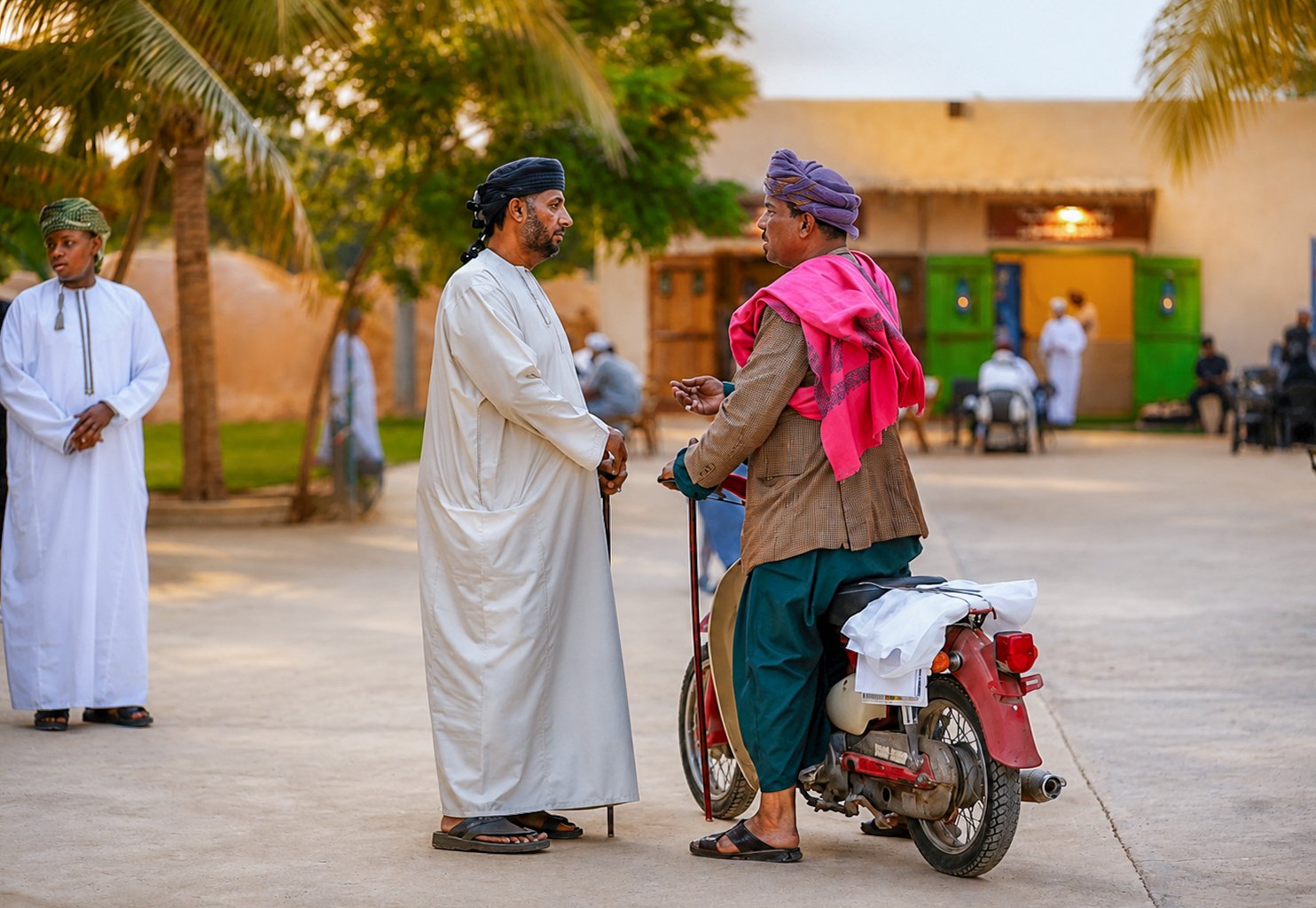
SALALAH, : The ‘Return of the Past’ event continues to welcome visitors at Al Saada in the
Wilayat of Salalah, amid the atmosphere of the khareef (Dhofar’s monsoon season) and the
warmth of a cherished past.
Organised by Dhofar Municipality as part of Khareef Dhofar 2026, the event is one of the season’s
leading heritage destinations. It highlights the diversity of the environments found across Dhofar
Governorate through faithful recreations of earlier ways of life and the occupations, crafts, social
occasions and folk arts that shaped Dhofari society across generations.
The event recreates the details of traditional Omani life and presents Dhofar’s artistic and cultural
heritage through live scenes depicting the governorate’s different environments, customs and
traditions, folk arts, handicrafts and old markets, taking visitors on a journey back to the time of
their ancestors.
The marine environment
The journey begins with the marine environment, which reflects the close relationship between
the people of Dhofar and the sea.
It features traditional fishing equipment, old boats and net-making, alongside the maritime arts
and chants once performed by seafarers during fishing trips to build enthusiasm and cooperation.
Among them are Al Shabaniyah and Al Dawari (traditional maritime performance arts), together
with Al Hawalis and Al Sayyad (traditional children’s games associated with coastal
communities).
The section also presents Al Sifarah, the custom of receiving travellers and announcing their
arrival. Accompanying chants convey the longing of families and their joy at a safe return.
Together, these elements recreate the atmosphere of coastal life and the occupations, customs and
traditions associated with the sea.
The urban environment
The urban environment presents aspects of social life in Dhofar’s towns in earlier times.
It highlights traditional wedding customs, including the groom’s procession, as well as
performances of Al Bar’ah (a traditional music-and-dance form from Dhofar) and Al Tabl (a
traditional drumming art), alongside other folk arts associated with social occasions.
The section also depicts everyday life in old neighbourhoods and the strong social bonds and
enduring values that characterised those communities.
The agricultural environment
The agricultural environment reflects the relationship between the people of Dhofar, the land and
farming.
It displays crops for which the governorate was traditionally known, including coconuts, locally
known as mashli, as well as bananas, papayas, lemons and a number of other fruits and
vegetables. It also depicts customs and traditions associated with farmers, the spirit of
cooperation during cultivation and harvesting, and the practice of honouring guests with produce
from local farms.
Traditional clothing associated with the lives of local communities is shown here, together with a
collection of old shops that once formed part of traditional markets. These include shops selling
honey, fruit and vegetables, birds and sheep, as well as outlets offering fandal (sweet potato),
watermelons and mashli. The display also includes a shop selling agricultural seedlings and tools
traditionally used by farmers for ploughing, irrigation and harvesting.
The section further presents the barter system once common in the past, under which goods and
produce were exchanged directly among members of the community — a practice that reflects the
solidarity, social cohesion and cooperation of Dhofari society in earlier times.
The rural environment
The rural environment presents an important aspect of traditional life in the mountains of Dhofar
Governorate.
At its centre is the traditional rural house, one of the principal elements of family life in the past.
It was built from locally available natural materials such as mud, stone and wood.
The house contains a range of objects used by residents in their daily lives, including the qirbah (a
leather container used to store water), vessels made from palm fronds and other simple tools
reflecting the nature of life at the time.
The section also demonstrates traditional methods of preparing food, most notably madhbi (meat
cooked on heated stones), the cooking of meat that had been dried on tree branches, and the
preparation of milk using hot stones.
Traditional indigo-dyed clothing worn by both men and women, known locally as al sabighah, is
on display, along with the khanjar (the traditional Omani curved dagger) or the mahfif,
traditionally used by men as part of their attire. These elements reflect an Omani heritage
preserved by successive generations.
The section also presents houses built from straw, stone and mud. Layers of straw and tarbal (a
locally used insulating material) helped maintain moderate indoor temperatures in summer and
warmth in winter.
The environment also recreates facilities associated with everyday life, including livestock
shelters, traditional storerooms for provisions and food, and a sheepskin container used to
preserve food.
Dhofar’s mountain and rural communities are rich in traditional arts associated with social
occasions. These include Al Raqeed (a men’s performance presented at weddings), Eili Maqbool
(a traditional duet performance) and Al Nana (a vocal art performed individually or as a duet). In
Al Dabrart, two or more poets exchange sung or melodically delivered verses in a poetic dialogue.
Children also practise traditional games such as Al Tab (a traditional children’s game).
The Bedouin environment
The Bedouin environment takes visitors into the life of the desert and the values traditionally
associated with it, including generosity, courage and social solidarity. The display is divided into
two sections.
The first features the Bedouin tent, woven from animal wool, together with the majlis (the
traditional guest reception area), in which desert communities received their guests — a reflection
of the importance of hospitality in Bedouin society, where coffee is served to visitors. It also
includes a dedicated frankincense exhibition presenting a model of a frankincense tree, the stages
of extracting and collecting its resin, and its journey along ancient trade caravans to countries
around the world. Traditional Bedouin crafts are also shown, including woven palm products,
pottery, leatherwork and the qirbah.
The second section recreates everyday Bedouin life. It features the tent in which Bedouin families
lived, the stone-built kitchen and examples of traditional attire, including the khanjar and the
khayzam, which was tied around the head.
Visitors can also experience a number of Bedouin performing arts. Among them is Al Taghrood, a
chant once sung during the journeys of frankincense caravans to ease the hardship of travel, along
with the rousing camel-related arts Merad Al Ibil and Shaddad Al Ibil, and Al Haboot, performed
on social occasions. The section also recreates traditional wedding ceremonies, including the
custom of Al Maghboor, under which camels and sheep were presented to the groom as gifts to
help him begin married life.
The traditional shops
The traditional marketplace takes visitors through the details of everyday life in earlier times.
Among its attractions is a tailor’s shop displaying an old sewing machine, heritage fabrics and
garments dating from the 1970s. The tailor demonstrates how women’s clothing was cut and
made in the past, and introduces visitors to traditional fabric names, among them Abu
Tuffahatain.
The market also includes an old grocery shop stocked with products once commonly sold in local
stores, including vintage soft-drink bottles. A photography studio displays early cameras and
equipment, together with the stages by which photographs were printed to document everyday
life. Visitors can also explore the clinic of the Dokhtar, the traditional folk healer, where methods
of healing are presented through the herbs, oils and tools once used in folk medicine.
The old post office and the kuttab
The old post office presents the journey of postal delivery and displays old postage stamps.
Nearby, the kuttab (the traditional Old school) presents the beginnings of children’s education
and the memorisation of the Holy Quran.
The Wali’s house
The Wali’s house illustrates the traditional role of the wali (the local administrative official
responsible for the wilayat) in overseeing the affairs of local communities and resolving disputes.
The display portrays the wali making his daily rounds through the area and receiving members of
the public, who would bring their complaints and concerns to him for resolution.
Souq Al Fardhah
The site also hosts Souq Al Fardhah, one of the event’s distinctive attractions, recreating the
atmosphere of traditional markets through the participation of productive families (home-based
producers), who display and promote their local products.
The market offers handicrafts and traditional products, traditional Dhofari foods, frankincense,
incense, perfumes, incense burners, clothing of all kinds and women’s accessories.
Omani Women’s Associations pavilion
The event also features a pavilion for the Omani Women’s Associations, highlighting the identity
of Omani women and their role in preserving the country’s heritage and folk traditions.
Associations from ten wilayats of Dhofar Governorate, among them Salalah and Taqah, present
the products for which their communities are known, including perfumes, traditional clothing,
handicrafts, crafts made by women and local cuisine. Together, the displays reflect the diversity of
Dhofar’s heritage and the creativity of Omani women.
Daily cultural performances
The Return of the Past Theatre hosts evening performances every day, presented by Al Mazyonah
Folk Arts Group and Al Shati Troupe. The programme is led by performances of Al Bar’ah
alongside a range of other folk arts and traditional games, recreating the atmosphere of earlier
generations.
Heritage restaurants and cafés
The event also includes a dedicated area for restaurants and cafés designed with heritage-inspired
décor reflecting traditional Omani life. The setting offers visitors an experience that combines
authentic traditional cuisine with a variety of contemporary dishes, reinforcing the heritage
character of the event and enriching the visit.
A living record of Dhofar’s heritage
Return of the Past remains one of the leading heritage destinations during Khareef Dhofar 2026,
presenting the artistic and cultural legacy of Dhofar Governorate and giving visitors the
opportunity to discover its different environments, customs, performing arts and crafts.
Through this experience, the event keeps the memory of the place alive in its authentic spirit and
allows successive generations to maintain their connection with the legacy of their parents and
grandparents.


