






ACCIONA TESTS NEXT-GENERATION REVERSE OSMOSIS SYSTEM TO IMPROVE DESALINATION EFFICIENCY
INNOVATION AND CIRCULARITY
The system also explores new ways to increase circularity in desalination plants by generating renewable energy and producing cleaning chemicals directly from brine streams.
DUBAI, MARCH XX, 2026. ACCIONA has successfully tested a next-generation reverse osmosis configuration designed to improve the energy efficiency and sustainability of seawater desalination, as part of the European innovation project LIFE INDESAL.
The pilot system completed nearly two years of demonstration at the Leading Experimental Accelerator in Desalination (LEAD®️), located at the San Pedro del Pinatar desalination plant in Spain. The trials confirmed stable and efficient performance while producing high-quality permeate water (total dissolved solids (TDS) below 200 mg/L).
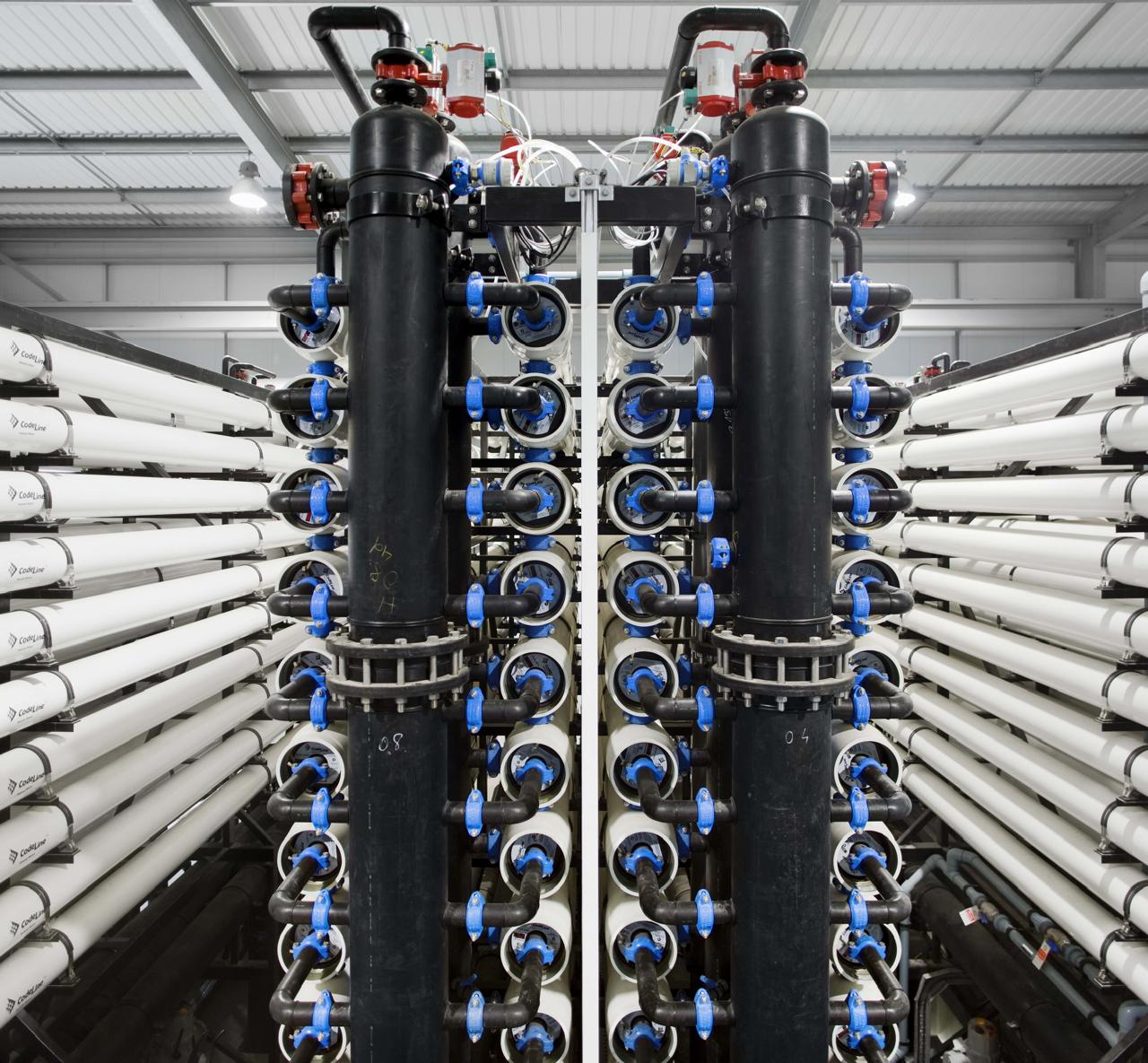
Results from the project show that the new configuration can reduce the energy consumption of reverse osmosis processes compared with conventional systems. The improvement is achieved mainly through the implementation of low-pressure multistage reverse osmosis, in which shorter pressure vessels enable a better flux distribution. Moreover, thanks to this configuration more tailored membrane-cleaning strategies can be applied to tackle fouling issues, which help optimize plant performance while maintaining high water quality.
Beyond energy savings, the project also explored new ways to enhance circularity in desalination plants by making use of brine streams generated during the process. During the demonstration phase, the system was able to generate renewable energy from brine (0.1 kWh per cubic metre of brine) by reverse electrodialysis and produce chemical reagents on site derived from the same stream applying electrodialysis with bipolar membranes.
This approach could allow desalination facilities in the future to generate the cleaning chemicals required for membrane maintenance directly within the plant, potentially increasing operational self-sufficiency while reducing the need for external chemical supply.
While the solution is currently at pilot stage, the configuration developed within LIFE INDESAL could potentially be scaled for use in future seawater desalination plants or integrated into existing facilities through partial retrofits.
With water scarcity becoming an increasingly pressing global challenge, improving the efficiency and sustainability of desalination technologies is a key priority in many water-stressed regions around the world.
The LIFE INDESAL project, coordinated by ACCIONA, has a total budget of €3.1 million and brings together several European partners, including the Department of Chemical and Biomolecular Engineering at the University of Cantabria, APRIA Systems, REDstack and REVOLVE.
The initiative highlights how innovation and international collaboration can help develop more energy-efficient and circular solutions for the future of desalination.


